
How to prevent drowning: what communities and individuals can do

Despite education, knowledge, technology, and the supposed evolution of Humankind, the figures around death by drowning are not going down, by any means, at the pace they should.
The truth is, drowning remains one of the world’s most persistent and overlooked public safety problems.
According to the World Health Organization (WHO), nearly a quarter of a million people die from drowning every year worldwide.
About 82,000 of those deaths involve children between the ages of 1 and 14. The tragedy is that most of these deaths are preventable.
To put things into perspective, in a small country like Portugal, 57 people lost their lives to drowning in the first five months of 2026.
Compared to previous years, the tragic numbers are not going down. On the contrary.
Sadly, drowning is not a rare accident.
It happens in oceans, rivers, lakes, swimming pools, harbors, canals, and even in very small amounts of water.
It often occurs quickly and without the dramatic cries for help seen in movies.
Health authorities, including the WHO, UNICEF, and the Centers for Disease Control and Prevention (CDC), all stress the same point: prevention is the most effective lifesaving tool.
So can we all do something to bring these numbers down?
We can. Here are a few actions we could demand of ourselves and the authorities that rule our hometown, region, and country.
The silent nature of drowning
One reason drowning remains so deadly is that many people do not recognize it when it happens.
A person in trouble may be unable to call for help because breathing becomes the body’s immediate priority.
Children can slip beneath the surface without attracting attention. In many cases, there is little noise and very little splashing.
Drowning can unfold in seconds.
The CDC notes that it is often silent, while UNICEF warns that young children can drown very quickly when supervision lapses.
For surfers and swimmers, it’s a reality that matters.
A crowded beach does not automatically mean safety. Hundreds of people may be nearby, yet a struggling swimmer can still go unnoticed.
Have you thought about that?
Why beaches need more lifeguards
Lifeguards are one of the most effective defenses against drowning. They identify dangerous conditions before beachgoers notice them.
They monitor swimmers, respond rapidly to emergencies, and educate visitors about hazards such as rip currents, shorebreak waves, changing tides, and submerged obstacles.
Many of the world’s busiest beaches are only partially staffed, staffed seasonally, or left without lifeguard coverage during parts of the day.
Yet popular beaches often attract visitors throughout the year, especially in regions with warm climates and active surf cultures.
Year-round lifeguard patrols should be considered a public safety priority at heavily visited beaches.
The presence of trained professionals can reduce response times when emergencies occur and can help prevent dangerous situations from developing in the first place.
A rescue carried out within moments can make the difference between a close call and a fatality.
For surfers, lifeguards often become an additional layer of protection in environments where currents, large surf, and changing weather can rapidly increase risk.
Think about high surf zones like the North Shore of Oahu or Nazaré.

Learning to swim is a lifesaving skill
Swimming ability remains one of the strongest protections against drowning.
The CDC reports that formal swimming lessons can reduce drowning risk among children and young adults.
UNICEF also highlights swimming education as one of the most important prevention measures for school-age children.
Learning to swim does not make anyone invincible. Strong swimmers can still be caught in rip currents or become exhausted in rough conditions.
Even so, water competency provides essential skills that improve survival chances when something goes wrong.
With surfers, confidence in open water should include more than board skills. Understanding currents, wave behavior, floating techniques, and self-rescue strategies can be just as important as catching waves.
Several high-profile surfers have lost their lives in the ocean.
Supervision saves lives
Across many drowning incidents involving children, a common factor appears again and again: a brief break in supervision.
Health agencies consistently recommend close and continuous supervision whenever children are near water.
Adults should avoid distractions such as phones, conversations, alcohol, or other activities that take attention away from the water.
The assumption that someone else is watching can be dangerous.
Beaches, pools, lakes, and rivers often contain many adults, yet responsibility can become unclear. Effective supervision works best when one person is clearly focused on watching the water.
It’s a principle that applies to surfers and adults as well. Lastly, friends should keep track of one another, especially in unfamiliar locations or challenging conditions.
Respect the ocean, rivers, lakes, and any body of water
Natural bodies of water present risks that do not exist in swimming pools.
Rip currents can pull swimmers away from shore. River currents may be stronger than they appear. Sudden drop-offs, submerged rocks, cold water, poor visibility, and rapidly changing weather can all contribute to emergencies.
The CDC notes that nearly half of fatal drownings among people aged 15 and older occur in natural waters such as oceans, lakes, and rivers.
Checking local conditions before entering the water should be as routine as applying sunscreen.
Surfers often study forecasts, tides, and winds before paddling out. Recreational swimmers can benefit from adopting the same habit.
Choosing beaches with lifeguard coverage and swimming in designated areas adds another important layer of safety.
Life jackets are still underused
Life jackets remain one of the simplest and most effective drowning prevention tools.
The CDC recommends wearing properly fitted life jackets during water activities, particularly while boating and in situations where conditions may change unexpectedly.
Many drowning victims never intended to enter the water.
Boat accidents, sudden weather changes, slips, and falls can place people in dangerous situations with little warning.
A life jacket can keep a person afloat long enough for rescue or self-recovery.
Alcohol and water are a dangerous combination
Alcohol contributes to many drowning incidents around the world. It affects judgment, balance, coordination, and reaction time.
People may overestimate their abilities, underestimate hazards, or make poor decisions about where and when to enter the water.
The WHO highlights alcohol use as a factor in many drowning scenarios, while the CDC advises avoiding alcohol before and during swimming, boating, or supervising children.
The ocean does not become more forgiving after a few drinks. It becomes less predictable because the person entering it is less prepared.
Knowing what to do in an emergency
Prevention is the goal, but preparation matters too.
UNICEF encourages parents and community members to learn CPR and basic rescue skills. Immediate action during the first minutes of an emergency can improve survival chances.
Experts also advise caution when attempting a rescue. An untrained person who enters the water can become a second victim.
Whenever possible, it is safer to reach or throw a flotation device to the person in distress while calling for professional help. UNICEF summarizes this idea with a simple message: “throw, don’t go.”
At beaches, the fastest response often comes from nearby lifeguards, another reason why professional patrols are so important.
Actions authorities can take
Before learning about the things you, dear reader, can do to stay safe in any body of water, let’s take a look at a few quick actions you should demand from your authorities to prevent drowning.
- Provide year-round lifeguard patrols at busy beaches and other popular swimming areas;
- Increase lifeguard staffing during holidays, weekends, and periods of large surf or heavy visitation;
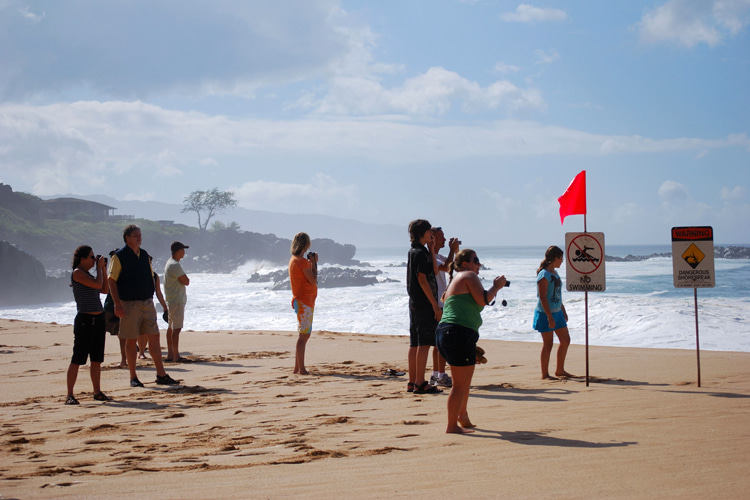
- Install clear safety signs that explain local hazards such as rip currents, strong tides, submerged rocks, and sudden drop-offs:
- Create designated swimming zones separated from boats, jet skis, and surf areas when appropriate;
- Invest in public swimming and water safety education programs, especially for children;
- Ensure rescue equipment such as flotation rings, rescue tubes, and emergency phones is available at high-risk locations;
- Improve public alerts for dangerous ocean, river, and lake conditions;
- Collect and analyze drowning data to identify high-risk areas and guide prevention efforts;
- Require life jackets in appropriate boating and water recreation settings;
- Promote CPR and first aid training within local communities;
Actions individuals can take
Now, it’s time to see what you could do to protect yourself and your loved ones. It only takes a minute.
- Learn how to swim and improve overall water competency;
- Swim at beaches and locations that are patrolled by lifeguards whenever possible;
- Check the weather, surf, tide, and water conditions before entering the water;
- Learn how to recognize and escape rip currents;
- Keep children under constant, close supervision near any body of water;
- Avoid alcohol and drugs before swimming, surfing, boating, or supervising others;
- Wear a properly fitted life jacket when boating or in risky water conditions;
- Never swim alone in remote areas;
- Stay within your skill level and avoid challenging conditions beyond your experience;
- Learn CPR and basic water rescue techniques;
- Enter unfamiliar rivers, lakes, and beaches cautiously, paying attention to currents, water depth, and underwater hazards;
- Call for help immediately if someone appears to be in distress, and use flotation devices rather than attempting a risky rescue;
Words by Luís MP | Founder of SurferToday.com