When offshore is onshore – and offshore again

When I landed in Fuerteventura in the Canary Islands, I felt as if part of my existence had returned to its original sacred home.
I had never been on this stunning, dormant volcanic island ruled by the Kingdom of Spain before.
So the feeling was as brutally intense as the lava fields and the trillions of dark rocks of all sizes that cover most of an island whose last eruption occurred approximately 4,000 to 5,000 years ago.
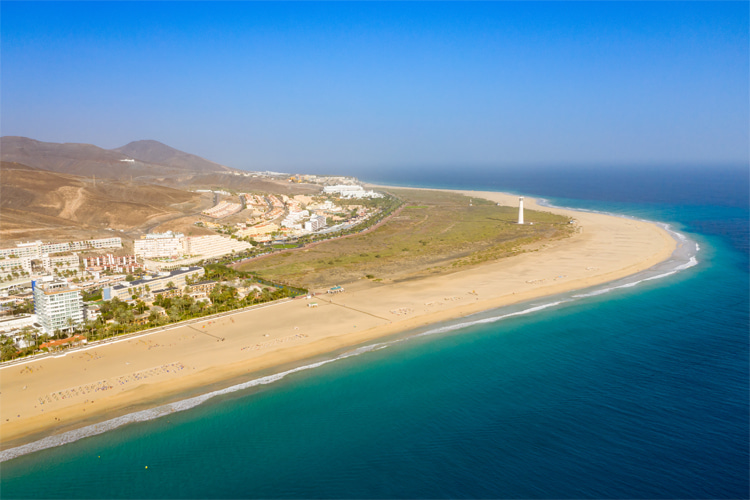
There is something truly fascinating and emotional about the marriage between the arid desert land and the turquoise-blue water that gently touches long strips of white sand here and there around the island.
On my way from the airport to the south of Fuerteventura, I was left stunned and mesmerized by the raw, violent force that Mother Nature imposed on this Atlantic paradise.
The bus that made the connection to the hotel had me jumping from the seats on the left to the ones on the right, as I stared, blessed by the opportunity, at the Universe’s creations: the sleepy volcanoes and the brutality of the endless plains that surround these giant mountains.
Fuerteventura emerged from the ocean almost 20 million years ago, with its formation beginning much earlier, in the depths of the ocean, over 100 million years ago.
It is the oldest island of the Canarian archipelago.
Fuerteventura 1, doomscrolling 0.
I feel as calm and at peace as this wonder of Nature.

A desert that is never nothing
I wonder why desert landscapes like this hit my soul and body the way they do. They instantly turn my brain into reflection mode.
The bus makes its way south at a good pace.
Suddenly, the asphalt road is the only civilized touch in the vicinity – there are immense sand dunes on both sides, and I cannot resist checking Google Maps.
Yes, a massive sand plain rules over the island from the northwest to the southeast of Fuerteventura.
It’s like nothing my eyes have ever laid on; beauty in a dreamy state. Sand dunes like those you may only see in the movies.
Fuerteventura reminds me of a place I have never been or thought existed. My very first thought was of Mars.
Everything looks like Mars on Earth, colonized, here and there, vaguely, by the last of us.
I saw single houses surrounded by just rocks and dark dust.
And as the bus was getting closer to the tip of Fuerteventura, I was swiftly invited to release a “Oh, my God…” to the collection of gorgeous blue shores where the wind was grooming the gentle, incoming swell.
A camper van by a perfectly peeling wave with nothing but water in the lineup. No surfers, no humans, no robots. Just the pure essence of surfing.
The wind patterns in Fuerteventura are well-known to watersports people. This sort of European Hawaii is the go-to destination for many windsurfers and kitesurfers.
But surfing rules this realm, too.
Here’s why. Fuerteventura lies directly in the path of the relentless Northeast Trade Winds (Alisios).
Driven by the Azores High, these winds blow consistently year-round from the North-Northeast (NNE), keeping the island’s climate pleasantly moderate.
They accelerate naturally as they flow over the ocean and channel across the island, typically bringing a refreshing breeze that averages 17 to 25 mph (15 to 22 knots).
Sea breezes are driven by the island’s temperature.
As the land heats up during the day, warm air rises and draws in cooler, denser air from the ocean, strengthening the overall wind speed.

Good luck, sailor
The island’s name is misleading, though. Many people incorrectly translate “Fuerteventura” as strong winds.
Although yes, it can be quite windy, it’s a compound formed by the Spanish words “fuerte” (“strong” or “fort”) and “ventura” (“fortune”), meaning wealth, luck, or destiny, or a reference to a “Great Fortunate” or lucky land.
After leaving my bags at rest in the hotel room, I ran toward the veranda that overlooks the multiple blue hues that make up this painting called the sea.
To the right, I observe a few waves bending to the elegant curvature of the shoreline and breaking as if calling for me.
In the last 60 minutes, I witnessed the ocean being blasted by wind, forming an army of white horses, the shore waters groomed by offshore breezes, and sideshore wind gusts agitating the water’s surface as the sunset fell on the opposite side of the coast.
In some islands, we are fortunate to witness offshore becoming onshore and turning offshore again at the blink of an eye, or, should I say, at the rolling of basalt rocks down the volcanic slopes.
Somewhere between Africa’s west coast and this Spanish desert island, my soul awaits the swell that turns these words into a memorable experience blessed by exotic wind patterns.
Because it’s the invisible, transparent but touchy force that generates the spectacle that I gaze at.
A tí, Fuerteventura.
Words by Luís MP | Founder of SurferToday.com